
How the Torrance Residents Directory Starts
A useful Torrance residents directory search begins with jurisdiction, not with a broad name query. A postal line that says Torrance can sit outside the incorporated city, especially around the 90502 area. That changes which office holds a permit or police report. The county assessor is the best first stop for a known address because its portal resolves an AIN, the parcel identifier used to connect assessment facts to deeds, permits, and maps. A known name needs a different path. Court party records, public filings, official registries, and historical newspapers each show a role, not a complete life story.
Five checks keep the trail clean and prevent a false match from becoming a conclusion:
- Check the city boundary and postal context through the Torrance public-records portal before choosing a municipal custodian.
- Run the Los Angeles County Assessor Portal by address or AIN, and save the parcel number shown in the result.
- Use the record type that fits the question: the LA Court Case Access search for a case party, the voter status tool for a self-check, or a state license or business index for a public affiliation.
- For an earlier household, search Torrance directories and the Herald in the library collection, then compare the entry with a census or vital record.
- If the needed record is not online, send a narrow request to the right office under the California Public Records Act rather than asking one agency to create a biography.
Torrance Resident Records Offices
Torrance is an incorporated city inside Los Angeles County, not a separate county records jurisdiction. City Clerk staff handle municipal records, permits, and local government material. The Los Angeles County Registrar-Recorder/County Clerk, often shortened to RR/CC, controls recorded real estate documents, elections, and many vital-record services. The Los Angeles Superior Court controls case files. This split is the central fact behind any Torrance residents directory workflow: an address, a voter status, a deed, and a court party may live in four different systems.
Los Angeles County RR/CC
12400 Imperial Highway
Norwalk, CA 90650
800-201-8999
Real Estate Records
Los Angeles County Assessor
Countywide parcel and assessment custodian
Public-service locations are listed by the office
Assessor public service
LA County Elections
Voter status and election records
800-815-2666, option 2
Voter Registration Status
For a Torrance city request, search published agendas, the city document portal, permit material, maps, and GIS pages before filing. A request should name an existing series, address, permit number, or date range. The county likewise routes court, Sheriff, planning, health, tax, and recorder questions to different departments. Knowing the custodian is often more valuable than adding another keyword to a search box.
Torrance AIN Search in the Assessor Portal
The LA County Assessor Portal is an address tool, not an unrestricted owner-name directory. It accepts an AIN or street address, offers a map view, and returns parcel facts such as situs, use, assessed values, tax-rate area, and transfer context where displayed. The result can tie a Torrance place to a durable parcel key. It cannot prove who sleeps there, identify every household member, or turn a tax-mail address into a current residence.
| Portal control | Input type | What it does | Practical use |
|---|---|---|---|
| Basic Search | Tab | Opens the address or AIN route | Start with a known parcel |
| Legal Search | Tab | Uses legal-description information | Bridge older deed wording |
| Map Search | Tab and map | Shows mapped lots to click | Inspect adjacent parcels |
| Search by AIN or Address | Autocomplete text | Suggests an exact address or AIN | Save the accepted result |
| Map zoom, pan, and parcel click | Map controls | Moves from one parcel to the next | Check a block without a bulk export |
A screenshot of the LA County parcel search shows the Basic, Legal, and Map modes together. The portal labels an assessor-records effective date and version, so record date and portal date should be kept separate. When the address is outside city limits, keep the AIN and route later requests to the county rather than assuming the Torrance city department owns the record.
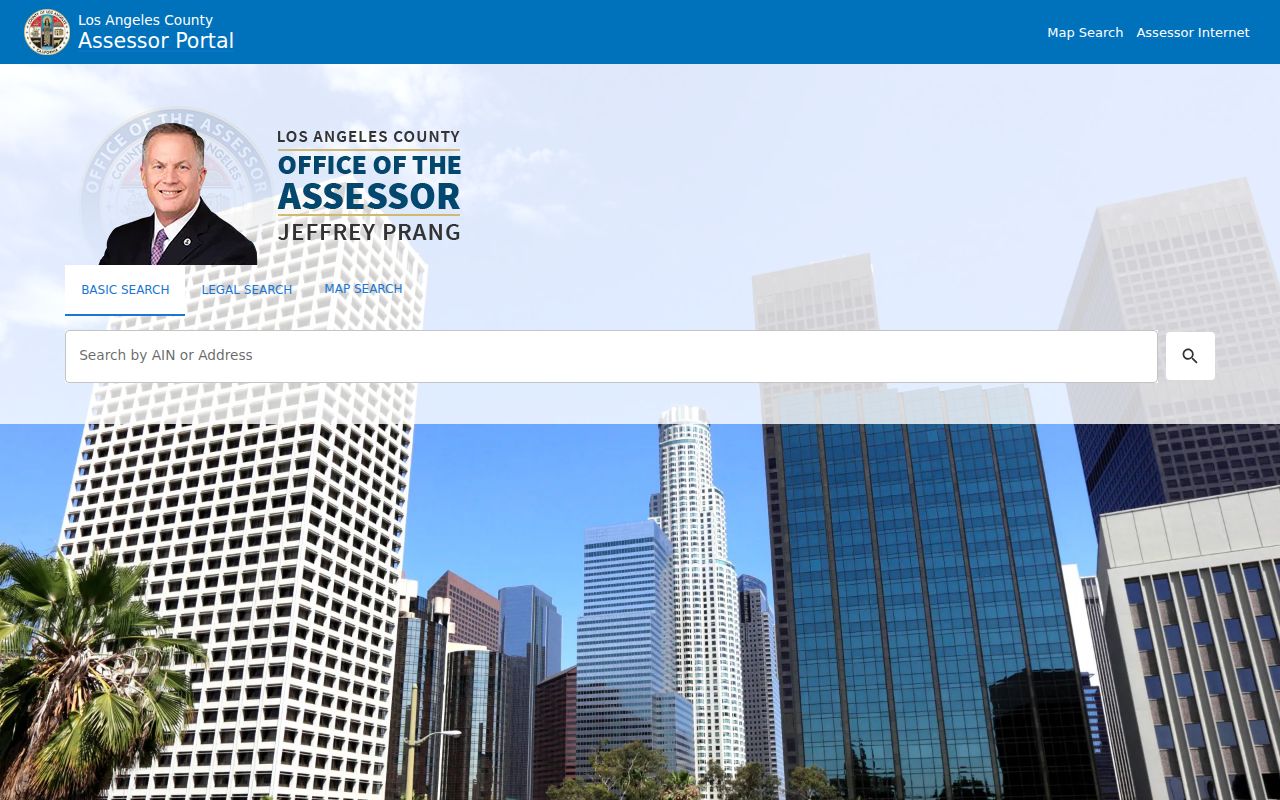
The parcel view is a strong starting image for a Torrance residents directory search because it shows the address key and map path, while the surrounding record still needs separate confirmation.
Torrance Recorder Research Since 1850
Los Angeles County RR/CC maintains recorded real-property instruments from 1850 forward. Deeds, deeds of trust, liens, releases, reconveyances, and maps can show a grantor, grantee, legal description, instrument number, and recording date. The public Internet does not provide an unrestricted grantor/grantee name index for Torrance. A serious title or resident-history trail therefore moves from the Assessor AIN to the current deed, then to Norwalk inspection, an office index, or a copy request.
The recorder route is a service workflow rather than a single search. If a document number or book and page are known, ask for that instrument. If not, inspect the name index in person and bracket the likely date. The office offers viewing and copy paths, but an address alone should not be described as a remote recorder search. A deed establishes an interest in property. It does not establish physical occupancy, and a recorded party can be a trust, estate, lender, seller, or other role.
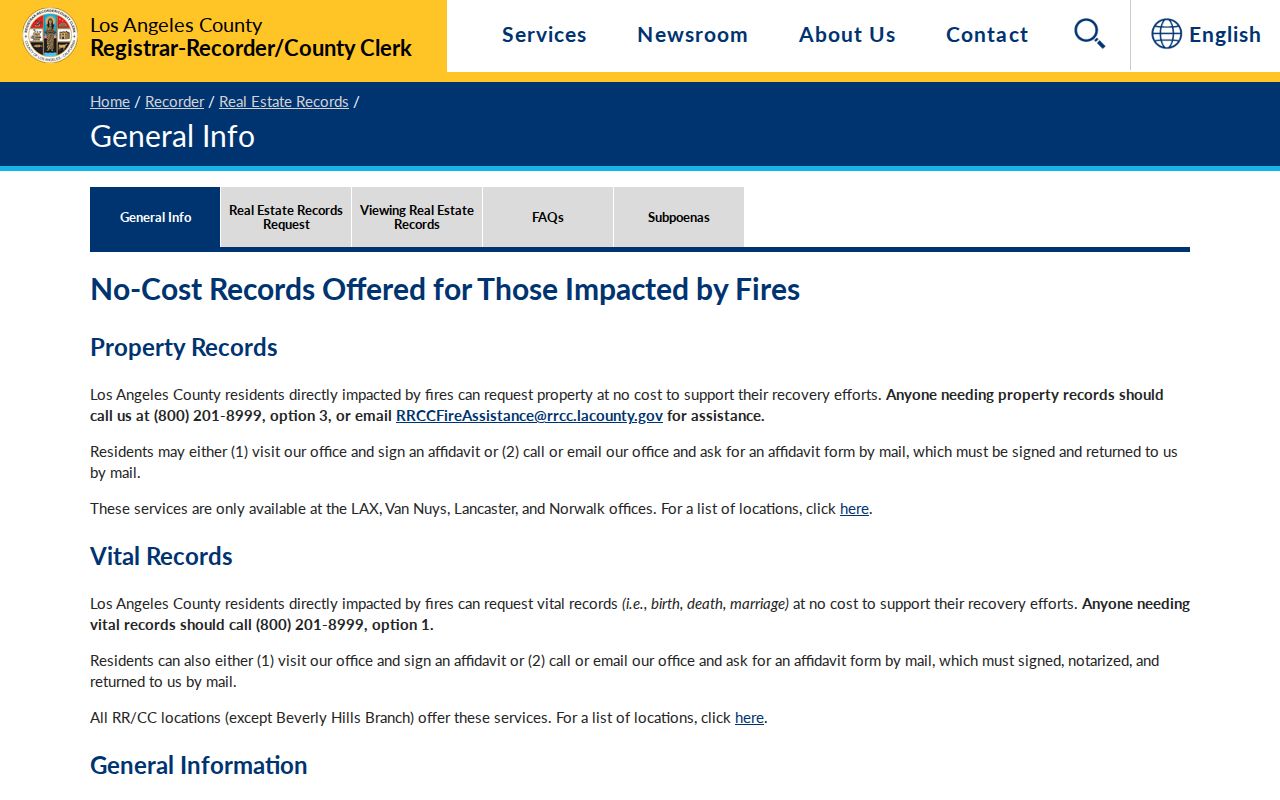
The county real-estate records page is the source for viewing and copy routes. Its office path matters when an online Torrance residents directory search reaches an older deed or a name-only index.
Recorded-document result fields: party names and roles, document type, recording date, instrument or document number, book and page for older records, legal description or APN when indexed, and an image or copy route. Sale price is not a reliable substitute for deed consideration, and restricted military discharge material or redacted identifiers are not ordinary public-display fields.
Current Torrance Resident Directory Sources
There is no single current Torrance residents directory that lists every person. The useful sources are role-based. The Assessor describes a parcel. The voter status form lets a person check a submitted combination of name, birthdate, house number, and ZIP. A deed names parties to an instrument. A permit names a project participant. A directory or newspaper lists a person as of its own canvass or publication date. Treat each row as evidence of the role it actually records.
| Source | Role or people shown | Custodian | Access |
|---|---|---|---|
| Parcel assessment | Parcel and ownership-related context | LA County Assessor | Free address or AIN portal |
| Voter status | Self-supplied registration match | LA County RR/CC | Four required inputs |
| Recorded instrument | Grantors, grantees, and secured parties | LA County RR/CC | Office index and copies |
| Permit record | Applicants, contractors, and project history | Torrance or county department | Archived or account-based portals |
| Directory or newspaper | Listed occupants, families, and public events | Torrance Public Library | Digital collection and reference help |
When a name is the starting point, the Torrance resident lookup workflow helps separate a court party, licensee, business agent, and listed occupant. When an address is the starting point, the Torrance street directory path keeps the AIN, legal description, permits, and historic address trail in the right order.
Torrance Voter Status Has Four Inputs
The LA County voter status tool is deliberately narrow. It asks for last name, birthdate, house number, and five-digit ZIP. That combination supports a person checking their own registration; it is not a public street roll or a ZIP-wide people list. A match can show registration status and election information. It cannot disclose ballot choices, and a registration is not proof of present occupancy.
California Elections Code sections 2188 and 2194, together with Government Code section 7924.000, restrict voter information. Home address, telephone, email, precinct, identifying numbers, and signatures are not general browsing fields. A full-file request uses the RR/CC voter-information process, identifies an authorized purpose and geography, accepts use restrictions, and may carry a quoted production charge. Aggregate Reports of Registration are a safer way to study city or party counts without exposing people.
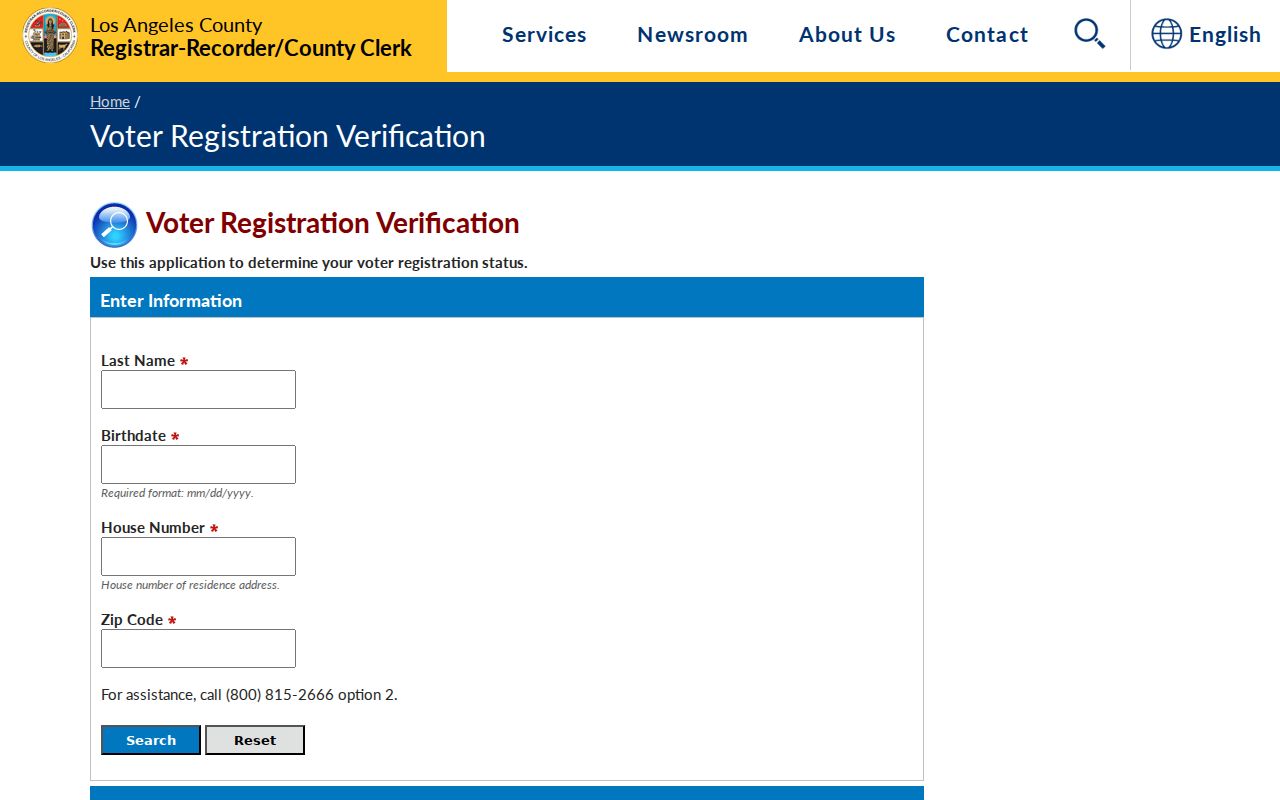
The LA County voter status lookup image makes the four-input limit visible. It is useful for self-verification, not for harvesting names along a Torrance street.
| Official roll | Commercial compilation | Better practice |
|---|---|---|
| Custodian and access rule are identifiable | Sources may be blended or stale | Read the original record date |
| Role is narrow, such as registration or title | One profile may merge same-name people | Keep each role in its own row |
| Correction goes to the responsible office | Edits may not reach the source | Use the custodian for confirmation |
Torrance Court Records by Case Class
Los Angeles Superior Court’s Southwest District serves Torrance through the Torrance Courthouse. Case Access separates civil, family, probate, criminal, traffic, and small-claims material, and the information shown remotely changes by case class. Search Type may offer Case Number or Party Name. Party name, first and middle name, filing-date range, case type, and location filters appear where that class supports them. A name hit needs a case number, courthouse, chronology, or other anchor before it is treated as the right person.
A public result can show case number, district, case type, filing date, status, party role, counsel, register-of-actions events, hearings, and a public disposition or judgment. Images may be absent, fee-gated, or available only at a courthouse terminal. Juvenile matters, adoption records, sealed files, confidential evaluations, and protected family material are not open simply because a name exists in a search form. Federal cases use PACER through the Central District of California, not the county portal.
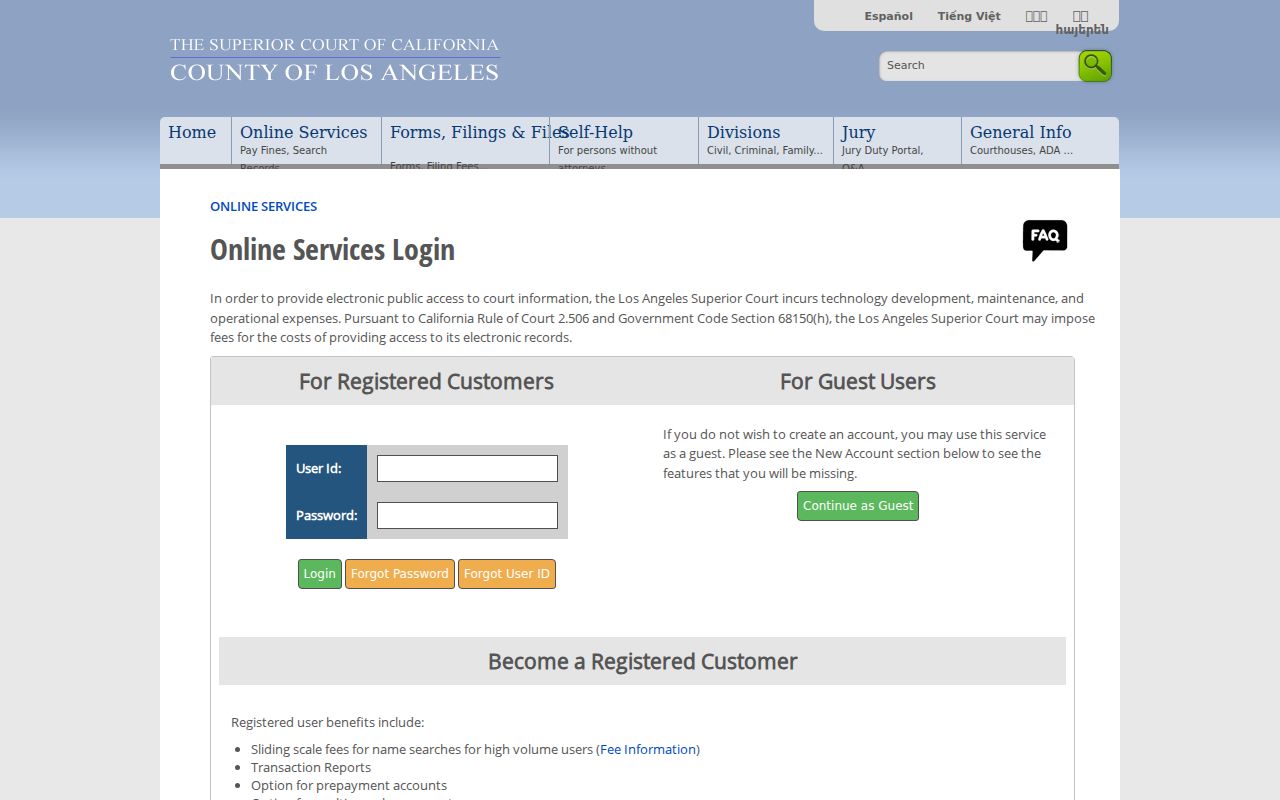
The LA Superior Court Case Access portal is the right source for a county case number and register, while the Torrance Courthouse information page explains the local file path when remote results are thin.
Torrance Vital Records, Two Access Levels
California uses an authorized-versus-informational model for most birth, death, and public-marriage copies. An informational copy is generally available to any requester but carries a notice that it cannot establish identity. An authorized certified copy is limited to eligible relatives, officials, representatives, or a court-order recipient, with a sworn statement under Health and Safety Code sections 103525-103526. Confidential marriage records follow Family Code sections 509-511, and adoption records are sealed.
For 2026, CDPH lists copy fees of $31 for birth, $26 for death, $19 for public marriage, and $18 for a dissolution certificate. Direct CDPH applications became mail-only after July 1, 2026, so use the current state forms and fee page rather than an old vendor route. Los Angeles County RR/CC is the practical county channel for a known county event. A divorce certificate is not the court judgment, and an early event may require newspapers, church registers, cemetery evidence, or county holdings.
Form fields to expect: applicant identity and contact details, record type, registrant or decedent name, event date and place, parents’ names where requested, relationship, copy type, signature, and date. The mailed authorized-copy statement must be notarized. The CDPH application forms and 2026 fee schedule are the controlling sources for a current order.
Torrance Business and License Records
A public affiliation can help distinguish two people with the same name, but it is not a home address or proof of residence. California Secretary of State bizfile searches entities by name or number and can show status, formation, addresses, agents, and filed statements. The Department of Consumer Affairs search adds license type, number, city or county, status, expiration, and discipline links. A county fictitious-business-name filing and a city permit can add a local tie. Each source should be recorded with its filing date and role.
The California bizfile search is a public filing index. Its result is an entity trail, not a claim that an agent or officer lives in Torrance.
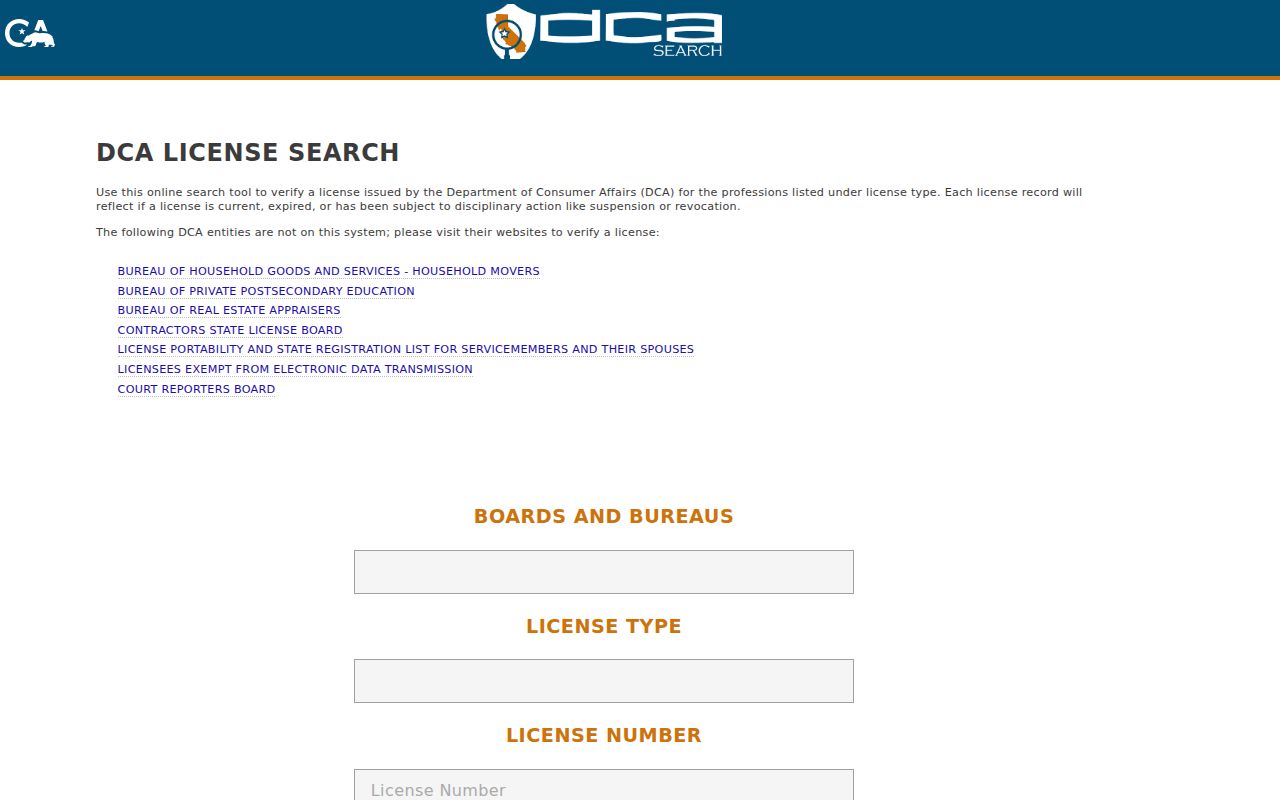
The California DCA license search can narrow a same-name question by board, license type, city, or credential number. Read status and discipline fields as license facts only.
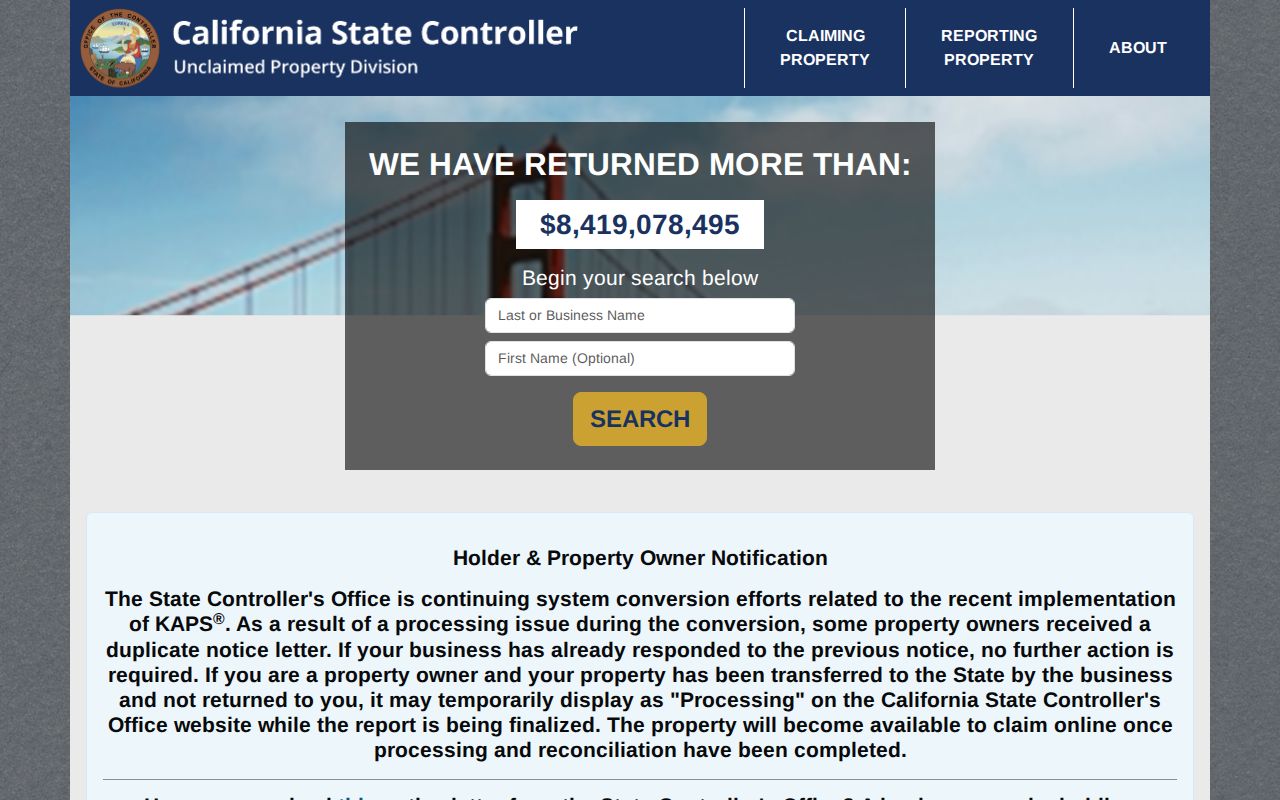
The State Controller unclaimed-property search is a lead based on name and city. A claim still requires proof, so it should never be treated as a current contact result.
Historical Torrance Resident Directories
Torrance Public Library and Torrance Historical Society supplied a digitized Torrance and South Bay city-directory run from 1922 through 1975. The collection can be searched in full text or browsed by item and date. It is not one uninterrupted publisher series, so the title page and item metadata should be captured before an entry is quoted. Alphabetical entries may show a name, spouse, occupation, home address, telephone, and marks such as h, r, wid, or ret. A criss-cross section reverses the path from street and number to a listed occupant.
The historical shelf gives a Torrance residents directory search its time depth. It can show how a household was listed during a directory canvass, but absence does not prove absence from the city. Married names, children, boarders, OCR errors, gaps, and publication lag all matter. The full collection method and entry-reading practice belong in the Torrance city directory collections, where the historical runs stay separate from modern parcel work.
Torrance Herald Names Through Time
The library’s digitized Torrance Herald runs from 1914 through 1969, beginning before incorporation and spanning the city’s postwar growth. The Torrance Press began as the Peninsula Press in 1949 and merged with the Herald in 1964. Search both titles when the dates overlap. Society columns can connect spouses and clubs, legal notices can locate a business or estate, and an obituary can suggest a death date or family link. These are leads, not certificates.
The collection also explains why Torrance records feel layered. A planned industrial city became a dense South Bay community, and the newspaper kept names that never entered a modern online roll. A 1940s directory entry can be checked against a census image, then tested against a later obituary or probate file. Keep the exact paper, date, page, and wording in the evidence log so a family-history clue does not become an unsupported fact.
Reference help is available through Torrance Public Library at 3301 Torrance Boulevard, Torrance, CA 90503, 310-618-5959. The library history and directories collection is the starting point for the digitized shelf.
Torrance Records Requests After Online Search
When a portal fails, the next step is not a broader search. Recheck spelling, unit numbers, city limits, and a persistent key such as an AIN, case number, instrument number, or entity number. Then name the custodian and ask for an existing record, date range, address, permit number, or file series. The California Public Records Act, Government Code sections 7920.000 and following, covers reasonably described, nonexempt existing records. It does not require an agency to answer questions or create a new biography.
Torrance municipal records go through the City Clerk after published material and the relevant document or citizen portal have been checked. Police records use the Police Records channel. County real-estate records use RR/CC. Court and divorce files go to Superior Court, not the county CPRA portal. Building, planning, tax, health, and Sheriff records each have their own county custodian. A focused request can ask for electronic copies, a cost estimate, an exemption citation, and segregable portions if part of a file is withheld.
Use the Los Angeles County CPRA routing page for department guidance and the Torrance City Clerk for municipal contact points.
Torrance Resident Lookup Same-Name Checks
A strong Torrance residents directory result keeps candidates in separate rows. Record the exact indexed name, middle initial, date window, role, associated city or address, spouse or relative, business, case or document number, and source date. Prefer persistent identifiers over spelling. Two independent records that agree on an AIN, case number, entity number, or chronology are stronger than several sites that repeat one stale source.
- Roll
- A maintained list or record set, such as an assessment or voter roll, with its own access rule.
- Index
- A pointer to a document or case; an index entry is not always the document image.
- Parcel
- A mapped piece of land identified by an AIN, with a situs address and assessment facts.
- Criss-cross directory
- A historical directory section arranged by street and house number rather than only by surname.
A Torrance mailing city can describe an unincorporated county address, so geography needs a parcel and boundary check. A deed party, tax-mail recipient, registered voter, permit applicant, case party, business agent, and listed occupant are different roles. Do not merge them because a surname and postal city happen to match.
Torrance Privacy and Safe at Home Limits
California protects more than it publishes. Safe at Home offers qualifying survivors and certain public or health workers a substitute mailing address and limits harmful publication under Government Code sections 6205-6211. It does not erase old deeds, court files, newspapers, or other public records. Voter home and contact data also has restricted access. The 2026 DROP system gives residents a single state request for registered data brokers, but a deletion request does not rewrite a government record.
Lawful personal use. Records can support genealogy, estate research, civic review, and ordinary efforts to reconnect. Do not use a Torrance residents directory search to stalk, harass, threaten, or harm another person. Verify a record with its custodian before acting on it.
California’s stalking and criminal-threat laws, voter-file restrictions, Megan’s Law warning, and federal limits on motor-vehicle data all matter when a record is used against someone. If an address trail reaches a protected participant, stop and use the official confidentiality process. The Safe at Home guidance and the California DROP page explain the state privacy routes.