
What a Torrance Resident Lookup Can Show
A good Torrance resident lookup assigns each source a single purpose. Parcel data can show association with a parcel and assessment context. A voter status form can verify a submitted combination, but the full file is restricted. Court access can reveal a party role and public events. A vital record can confirm an event subject to copy rules. A license or business filing can establish a public affiliation. None of these sources is a complete list of everyone connected to a person.
| Record | What it confirms | Where to search | Access |
|---|---|---|---|
| Parcel and tax context | Association with a parcel, AIN, and assessment facts | LA County Assessor and TTC | Free address/AIN tools |
| Voter status | Submitted name, birthdate, house number, and ZIP match | LA County RR/CC | Self-check; full data restricted |
| Court record | Party role, case events, and public disposition | LA Superior Court | Class-specific; fees or redactions may apply |
| Vital record | Birth, death, public marriage, or certificate event | RR/CC or CDPH | Informational or authorized copy rules |
| Business or license filing | Entity, agent, credential, and public status | SOS bizfile or DCA | Free index; role may be dated |
| Unclaimed property | Name and city lead | State Controller | Free search; proof needed to claim |
Start with the record that matches what is known. An address supports an AIN search. A case number is stronger than a common surname. A decedent’s name supports probate. A business name supports bizfile and FBN research. That is the core of a Torrance resident lookup: a documented connection, not a pile of unranked hits.
Build a Two-Record Torrance Identity Match
Same-name errors are the main risk in a Torrance resident lookup. Give every candidate a separate row and record only what the source shows: exact name, middle initial, date window, role, city or address, spouse or relative, case or document number, and source date. A Torrance mailing address may describe unincorporated county territory, so geographic fit needs a parcel or boundary check. Prefer AINs, case numbers, instrument numbers, entity numbers, and license numbers over a spelling match.
- Write the known name exactly, then add initials, alternate spellings, married names, and any known date range.
- Anchor the person to a place through an address, parcel AIN, court location, directory entry, business filing, or other source-observed clue.
- Run a second record from a different custodian and compare role, chronology, and location rather than counting repeated copies of one source.
- Mark contradictions. Do not average two addresses or merge two people because both use Torrance as a mailing city.
- Ask the source custodian to correct a source record when needed; do not rely on a compilation to repair the original.
Clerks can explain a search or copy process. They do not perform open-ended biography research or certify that two same-name parties are one person. The researcher supplies the identity reasoning and keeps the source roles visible.
Torrance Property Association Is Not Occupancy
The LA County Assessor Portal is a strong name-to-address starting point only when an address is already known. It returns a parcel, AIN, situs, characteristics, assessed values, and related context. The public route does not offer an unrestricted owner-name directory. The Treasurer and Tax Collector adds secured tax-bill information. A recorded deed can identify a grantee, but title does not establish who physically occupies a property.
For an address-led question, save the AIN, confirm city limits, and carry that identifier into the recorder or permit path. For a name-led question, do not assume a failed owner search means the person has no property association. The parcel, deed, tax, and occupancy questions remain separate. This distinction also prevents a mailing address or trust address from being mistaken for a current home.
The Assessor Portal is the free official starting tool. Modern street and parcel work belongs in the Torrance street directory workflow when a name search turns into an address question.
Search Torrance Court Parties by Case Class
LA Superior Court Case Access separates civil, family, probate, criminal, traffic, and small-claims material. Search Type may offer Case Number or Party Name. Last or business name is conditional, while first name, middle name, filing date range, case type, and location filters vary by class. A name query can be fee-based, and a remote search may show an index without the document image. The Torrance Courthouse is the local file and terminal fallback.
A result may show a case number, courthouse or district, case type, filing date, status, party names and roles, counsel, register-of-actions events, hearing dates, disposition, judgment, and available document links. DOB, Social Security numbers, financial-account numbers, victim details, juvenile material, sealed records, and confidential family content are redacted or withheld.
| Result field | How it helps verify a person |
|---|---|
| Case number and courthouse | Persistent identifier and local file route |
| Party role and counsel | Shows how the name appears in the case |
| Filing date and register events | Places the record in time |
| Status, disposition, or judgment | Describes the public case outcome where shown |
| Document link or copy route | Separates an index hit from the actual file |
Use the LA Court Case Access portal to find a case number, then use the Torrance Courthouse page for local access. Federal cases use the Central District of California and PACER, not the county search.
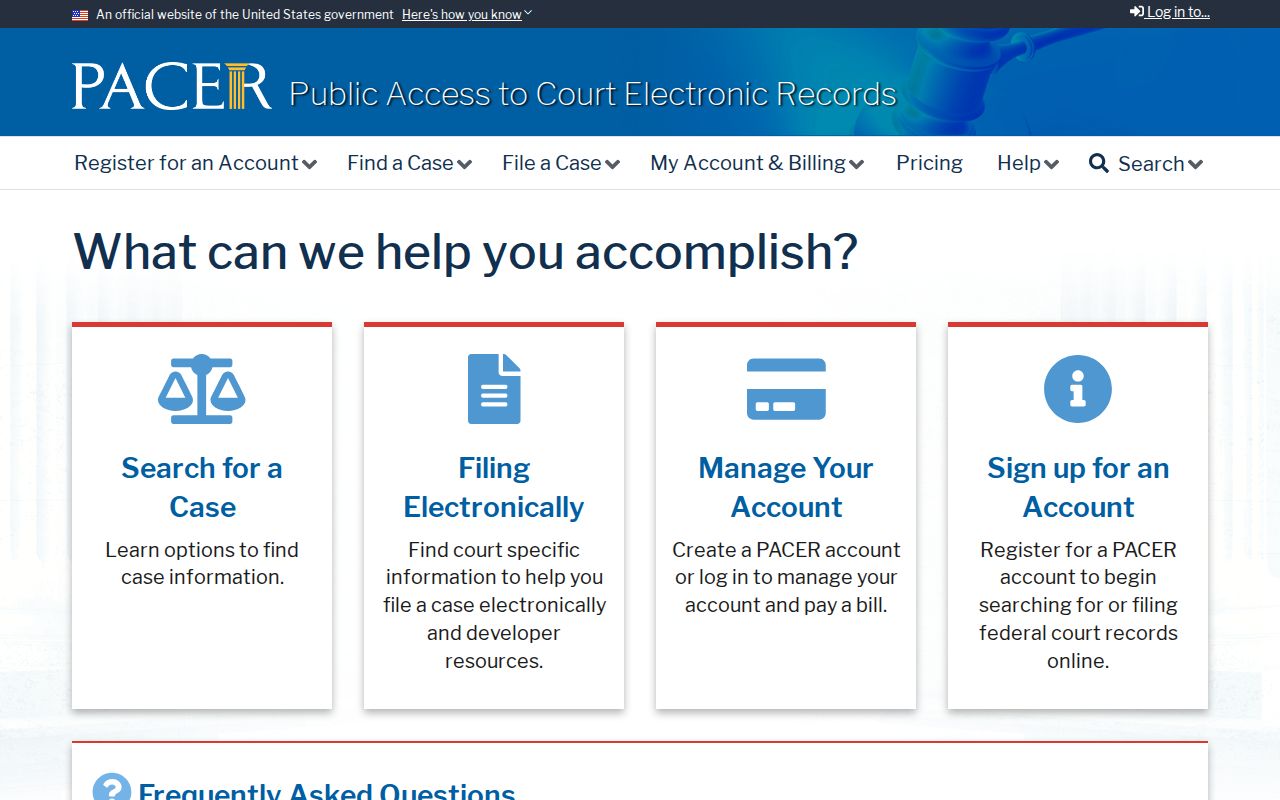
The federal search image marks the boundary between a county case and a Central District federal case in a Torrance resident lookup.
PACER charges $0.10 per page, capped at $3 per document, with quarterly fees waived at $30 or less under the research-checked schedule. Verify the current fee before ordering.
Verify Torrance Vital Events Carefully
California vital records answer an event question, not a broad resident question. Birth, death, and public-marriage copies may be informational or authorized. Informational copies are generally available but carry a legend that they cannot establish identity. Authorized certified copies require an eligible requester and sworn statement under Health and Safety Code sections 103525-103526. Confidential marriage records follow Family Code sections 509-511, and adoption records are sealed.
For 2026, CDPH lists $31 for birth, $26 for death, $19 for public marriage, and $18 for a dissolution certificate. CDPH stopped accepting applications submitted through online third-party vendors on July 1, 2026, making direct mail forms the current route in the research. Los Angeles County RR/CC is a practical county route for a known county event. A CDPH divorce certificate is not the Superior Court judgment.
A form may request applicant details, registrant or decedent name, event date and place, parents’ names, relationship, copy type, signature, and date. A mailed authorized statement must be notarized. The CDPH copy distinction is more important than an assumed closure period. When a same-name result appears, compare the event place and relationships before ordering a copy.
Use Probate or Adoption for Family Questions
Different personal goals need different official trails. For an heir question, search probate by decedent in LA Superior Court, capture the probate number, and inspect public petitions, notices, and orders for a representative or heirs. For a birth-parent question, use California’s official adoption information and contact-consent procedures. Sealed adoption records are not a public directory and should not be bypassed through a general name search.
For a former classmate, start with the library’s city directories, yearbooks, newspapers, or an alumni channel. For a deceased former resident, pair the directory with a Herald obituary, an informational death copy, and probate. Each trail has a lawful endpoint. A family-history clue becomes stronger when the name, date, relationship, and source custodian agree.
Keep the purpose narrow and the record role explicit. A probate petition can connect people through an estate, but it does not prove every address in the file was current. A newspaper can suggest a relationship, but a certificate or court file may be needed for confirmation.
California Custody and Registry Searches
Some official search tools describe a person’s custody or statutory registration status. They should be used only for the limited fact they publish. The LA County Sheriff Inmate Information Center can return county custody details from a name or booking number. CDCR CIRIS covers the state prison population. California’s Megan’s Law site offers name and map or radius modes with a misuse warning. An arrest, custody entry, or registration is not the same as a conviction or a general identity profile.
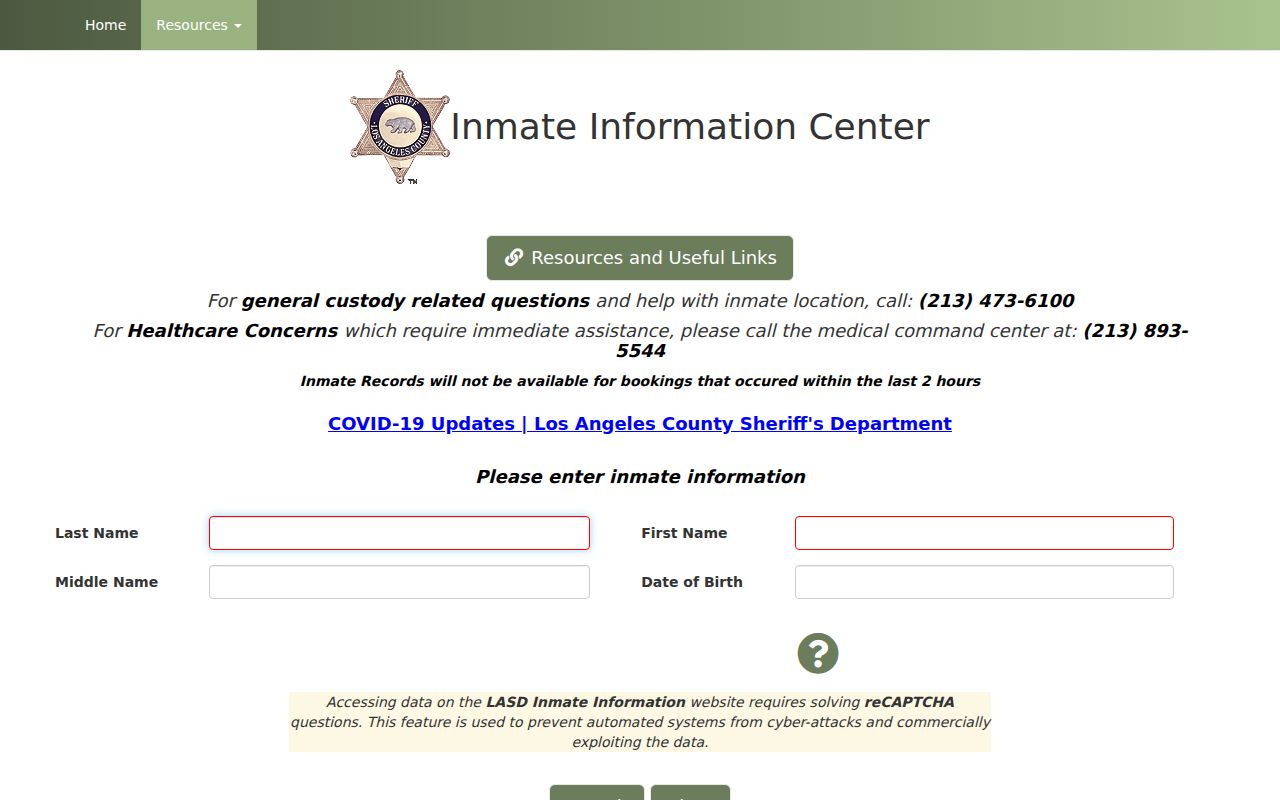
The LA County inmate lookup image shows the county-custody scope of one official Torrance resident lookup source.
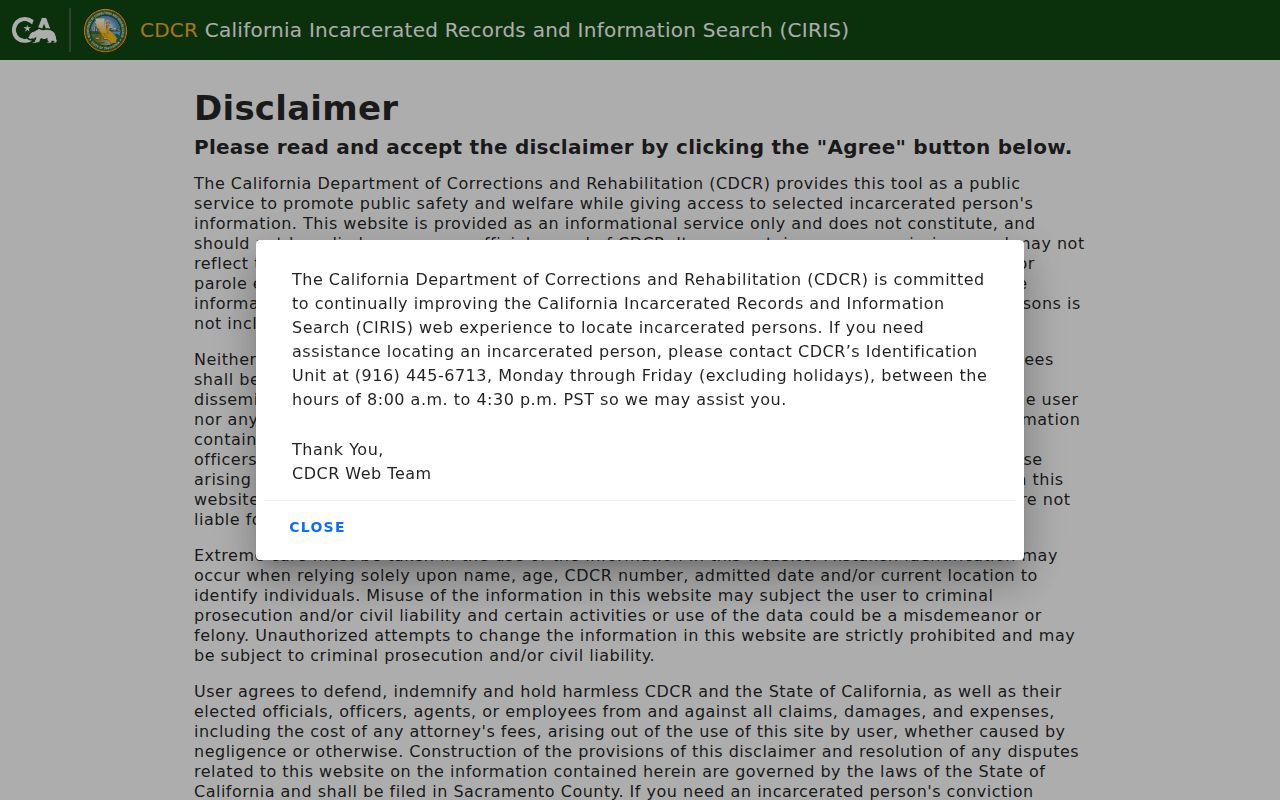
The CDCR CIRIS search is a state-prison route, so a county jail result and a state result should never be merged without matching identifiers.
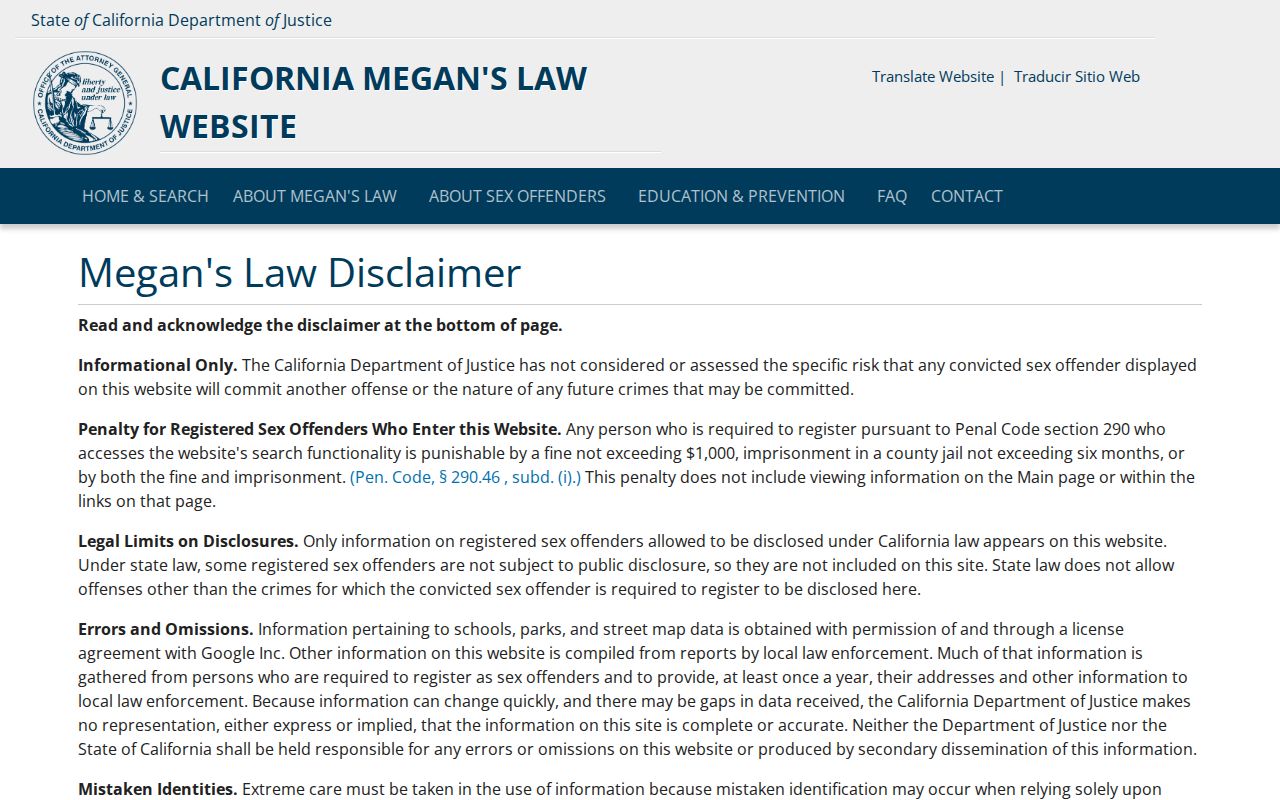
The California Megan’s Law site has its own statutory-use warning. Do not use a registry result to harass, threaten, or infer facts the site does not publish.
Connect Torrance Business Names to Filings
When a person is linked to a business, the California Secretary of State bizfile index and the Department of Consumer Affairs search can provide an independent public affiliation. Bizfile can show entity name or number, type, status, formation, addresses, agent, and filed statements. DCA can show board or bureau, license type and number, name or city search, status, expiration, and a discipline link. A business agent or licensee is a filing role. It is not proof of a private address or a complete identity.
Compare the filing date, entity number, city, and name variant. Add a county fictitious-business-name filing or a Torrance permit only when the record fits the same business and date. The source custodian is the right place to correct a filing. A compilation that repeats an old agent address is not a replacement for the statement filed with the state.
Correct the Source, Not a Compilation
Each official office corrects its own record. Ask the Assessor about assessment facts and AIN fields, the court about a docket or file, RR/CC or CDPH about a vital or recorded document, and SOS or a licensing board about a filing. Library staff can explain a volume or database, but they cannot change a historical scan or disclose patron activity. A focused call naming the record type, date, number, and desired copy is more useful than an open-ended request for everything about a person.
For an online no-result, use the escalation ladder: recheck spelling and unit, try a persistent identifier, adjust the date window, switch to the counter or index, request an existing series from the proper custodian, then consult the library or archives. Record whether the gap is a restricted record, offline record, missing volume, or person-not-found. Those are not the same outcome.
Legal Limits on a Torrance Resident Lookup
California protects voter data, Safe at Home participants, adoption files, sealed court material, DMV information, and other sensitive records. The California Public Records Act opens reasonably described nonexempt existing records, but it does not override a specific confidentiality rule. Safe at Home supplies a substitute mailing address to qualifying participants and does not erase old public records. Privacy rights and the official deletion process can reduce commercial circulation without changing deeds, court files, newspapers, or archives.
Lawful personal use. A Torrance resident lookup is suitable for genealogy, estate research, reconnecting, and defined civic questions. Do not use a name result to stalk, harass, intimidate, threaten, or harm another person. Verify with the custodian before relying on any record.
A search result is a record pointer, not permission to publish private details or contact a protected person. The source’s role, date, access rule, and correction path should travel with every note taken from a lookup.